

Gold, Taste and Timing
Or: whatever happened to yellow gold?

Recently I took my only rose gold watch out of the safe. It got me thinking. What happened to yellow gold?

For most of watchmaking history, the choice was relatively straightforward. If you owned a fine watch, it was in yellow gold. There was no debate. No preference. No cultural baggage.
Bar rare exceptions, gold was gold, and gold was yellow.
Today, that same choice feels almost rebellious.
Somewhere along the way, yellow gold lost its lustre. I have always been fascinated by what changed so suddenly.
The Default That Disappeared
Let’s start at the beginning. In its natural state, gold is yellow and shiny. This must have appealed to our ancestors immediately. Gold has been used in jewellery and ornamentation for roughly four thousand years. The Egyptians revered it. The Romans wore it. Every civilisation that has ever placed value on precious objects has placed yellow gold near the top of the list.
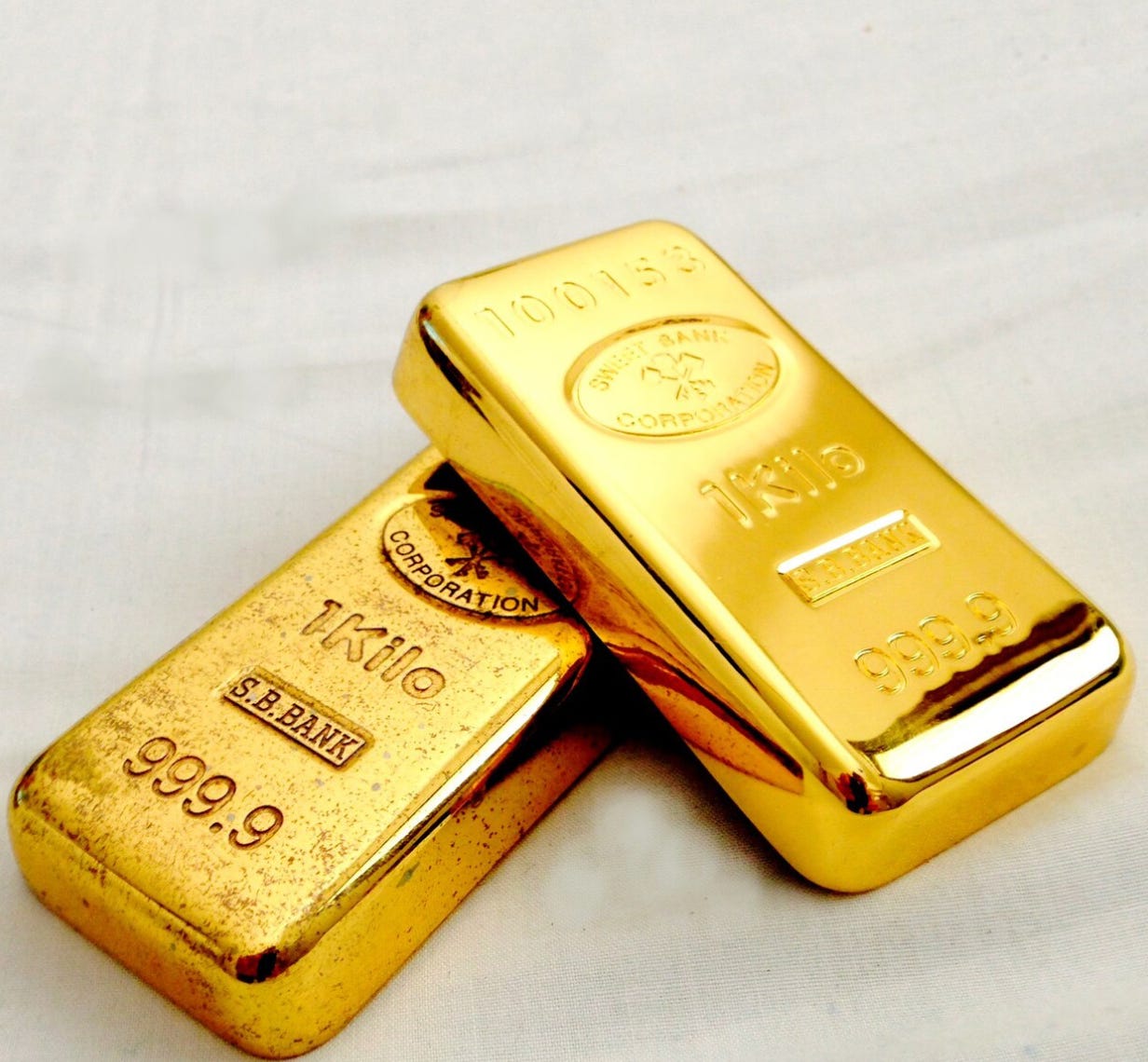
When watchmaking emerged as a serious craft in the sixteenth and seventeenth centuries, there really was no question what the case should be made from. Yellow gold was the material of prestige. Everything else was a compromise.
This remained largely true through the golden age of horology. The great dress watches of the mid-twentieth century were yellow gold almost by default.
Which makes the shift that followed so odd. Because yellow gold did not gradually evolve out of favour. It was, in many ways, quietly abandoned.
The Rise of Quiet Wealth?
I recall a shift somewhere in the late 1990s.
Steel became cool. Not just acceptable, but genuinely desirable. The Rolex Submariner and Daytona became objects of desire precisely because they were in steel. A few years later the Patek Nautilus and the AP Royal Oak, both conceived as steel sports watches, began their ascent towards mythical status.
For a new generation of collectors, steel was the insider move. It said: I know what I am doing. I am not here to show off. I understand watches.
Yellow gold, by contrast, began to carry a different set of baggage. An industry veteran once described it to me in terms I have never forgotten: when he started in the watch business, the man in the back of the chauffeured car wore a gold watch, and the driver wore steel. That image became what yellow gold represented to a generation. The excesses of the 1980s.
In short, yellow gold became your father’s watch. And not in a good way.
The Curious Case of Rose Gold
Into this space stepped rose gold.
Rose gold is not a new invention. Carl Fabergé used it in his famous eggs in the nineteenth century, where it was known simply as Russian gold. Cartier brought it to wider attention in the 1920s with their Trinity ring with three interlocking bands in yellow, white, and rose gold. It was present through the Retro era of the 1940s and 1950s before fading away again.
From late 2000s, brands leaned back into it aggressively by offering rose gold variants of the steel watches that were in such demand. I remember it was easy to buy a full gold Nautilus whilst a steel one was impossible to get. I would venture to think much of the initial the demand for rose gold, was simply latent demand for hype steel models.
Amusingly in 2016, Pantone named Rose Quartz as colour of the year. Everything had turned pink. Phones, laptops, kitchen appliances. The watch industry, rarely immune to broader cultural trends was part of that shift albeit at a slower pace. Remember when salmon dials were a rare thing?
Rose gold offered something yellow gold no longer could: precious metal without the baggage. It felt warmer than white gold, more contemporary than yellow. It was perceived as luxurious but not loud. It was, for a time, the perfect middle ground.
The Proprietary Gold Arms Race
What followed was, depending on your perspective, either a flowering of metallurgical creativity or a masterclass in marketing.
Rolex introduced Everose Gold, a proprietary rose gold formula with added platinum to prevent the fading that copper-heavy alloys can develop over time. Technically sound, commercially brilliant.
Then came the others. Lange’s Honey Gold. Hublot’s King Gold and Magic Gold. Omega’s Moonshine, Sedna, and Canopus Gold. Montblanc’s Lime Gold. Audemars Piguet’s Sand Gold. Breguet’s simply named Breguet Gold.
Each was presented as a unique innovation. Each was, to varying degrees, a way for brands to differentiate themselves in a crowded market while protecting a proprietary material from direct comparison.
I will leave it to the reader to decide where innovation ends and marketing begins. I have my own view.
What is undeniable is that yellow gold became almost unfashionable by association. If you were serious, you wore steel or platinum. If you were tasteful, you wore rose or white. Yellow gold was for those who were neither i.e. mugs like me.
The Comeback Nobody Predicted
And yet.
In the last two or three years, something has shifted again. Yellow gold is back. Not creeping back apologetically, but arriving with some confidence.
The Piaget Polo 79 reissue in solid yellow gold made headlines precisely because it was unapologetically opulent. The Vacheron Constantin 222 revival. New yellow gold references from Audemars Piguet, Tudor, and Bulgari. The New York Times even ran a piece on the trend in late 2023.
In jewellery, the parallel movement had been underway slightly earlier. Yellow gold engagement rings, long considered old-fashioned, began reappearing. Vintage-inspired pieces in warm yellow gold found a new audience. The same collectors who had spent years in steel were rediscovering something they had been told was unfashionable and finding it beautiful.
What is driving this? A few things, I think.
Partly it is the natural rhythm of taste. Fashion abhors permanence. What is rejected by one generation is rediscovered by the next. The grand children of people who wore yellow gold in the 1970s are now at the age where they are buying serious watches, and they find the warmth of yellow gold striking rather than passé.
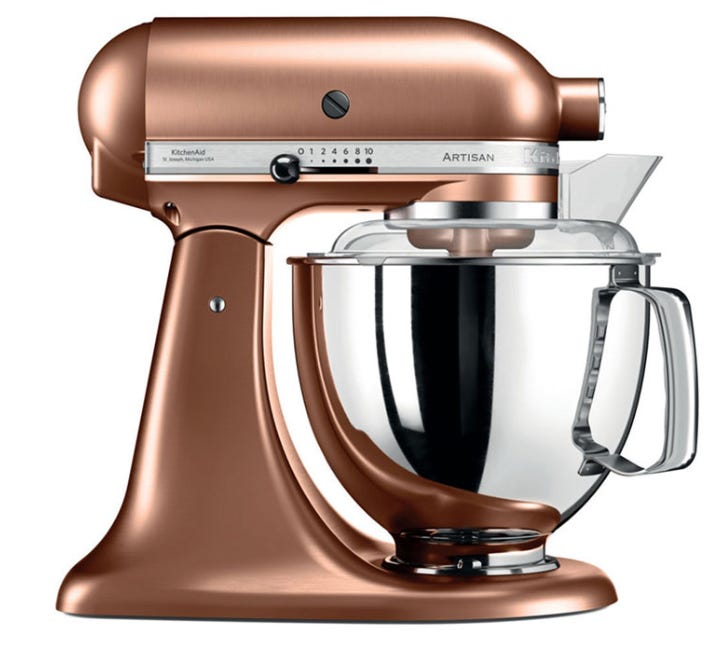
Partly it is the saturation of rose gold. When everything is rose gold eg phones, watches, jewellery, kitchen appliances…. rose gold stops feeling distinctive. Yellow gold, having been absent from fashion for twenty years, now feels fresh by comparison.
And partly, I suspect, it is a broader reaction against the tyranny of cool. The steel sports watch boom produced extraordinary pieces, but it also produced a certain earnestness. Everything had to be understated. Yellow gold is not understated. It does not pretend. There is, increasingly, an audience for that honesty.
Finally, as interest in vintage watches grows, collectors are simply becoming used to seeing yellow gold again.
What Our Choices Actually Say
The deeper question, the one that interests me most, is what any of this tells us about ourselves.
We like to believe that our aesthetic preferences are personal. That we choose rose gold because we find it beautiful, or yellow gold because we appreciate its history. And perhaps that is partly true.
But the story of gold in watches and jewellery over the past thirty years suggests that our choices are never entirely free from social context. Yellow gold fell from favour not because it became less beautiful but because of what it came to represent. Rose gold rose (sorry, I had to) not purely on its aesthetic merits but because it arrived at the right cultural moment.
We are, all of us, more influenced by these currents than we care to admit.
The man who told his friends in 2005 that yellow gold was flashy was not making an aesthetic judgement. He was making a social judgement. The collector today who reaches for a yellow gold Calatrava is not simply choosing a metal. He is, consciously or otherwise, making a statement about where he stands in relation to thirty years of horological fashion.
None of this is a criticism. It is simply an observation.
Taste is never formed in a vacuum. And the colour of the metal on your wrist says rather more about the era you are collecting in than it does about you.
A Final Thought
Yellow gold has been with us for four thousand years. It has survived the quartz crisis, the steel boom, the rose gold decade, and the proprietary alloy arms race.
I am biased, but my instinct is that it will outlast whatever comes next as well.
The pendulum swings. It always does.
The question always worth asking is whether you actually love the object, or whether you are simply following the direction of travel. That probably applies to the colour of gold, interior angles, green dials and independent brands.
Good article.
While I can understand that fashions change, what I can't understand is the extent to which most brands have abandoned yellow gold.
While the watches you cite, the 222 and the Polo 70, were huge hits, Vacheron only has a single other current reference in yellow and Piaget 2.
Lange who launched exclusively in yellow gold now has only 4 of 92 models in yellow, the limited Datograph Handwekskunst, and 3 "Flagship Exclusives".
Meanwhile the 2 brands that are still strong in yellow gold, Rolex and Cartier, sell more watches than anyone else.
It doesn't make a lot of sense.
As someone who grew up in the US in the eighties, in a house made in the eighties, the primary association I had with yellow gold was the ugly yellow gold brass fixtures that were used on lighting, faucets, door knobs, etc. That hardware didn’t age in a particularly pleasing way either and it really put me off on yellow gold, even outside of some of the more garish social contexts you talk about.
If you had asked me 14 years ago when I first got into watches what my first precious metal watch would be, I would have definitely said rose gold or platinum. But as of late, I have found myself looking at Neo-vintage in yellow gold…but I can’t help but wonder if that’s just my inner bargain seeker, looking for that because I think there are deals to be had?
I did in fact buy my first precious metal watch a month ago (I’m a late bloomer), as I’ve never really felt the need to have a nice dress watch before. It was actually in rose gold despite my recent leanings, but the purchase decision was based more on the entire package of how the particular dial design/color matched so well with the case metal.